
Faruk Ahmed Roni: A Voice Rooted in Memory, Migration, and Meaning
Faruk Ahmed Roni is a distinguished poet, writer, and creative activist known for his profound contributions to literature.
Faruk Ahmed Roni is a poet whose voice echoes across continents. A writer shaped by the landscapes of his birth and the long arc of migration, his poetry embodies both the tenderness of memory and the quiet resilience of survival. Born on 24 May 1968 in Sylhet, Bangladesh, and later settling in the United Kingdom, Roni writes from the space in between:
between homeland and diaspora, time and longing, presence and loss. His literary journey spans decades and cultures, with work that bridges personal introspection and universal human experience.
Faruk Ahmed Roni’s childhood in Sylhet left an indelible imprint on his creative consciousness. The lush green fields, the hum of monsoon rain, the rhythmic call to prayer, and the oral storytelling traditions of Bengali culture shaped his imaginative world. Even as a young boy, he observed life carefully and quietly, absorbing emotional nuances that would later form the heart of his poetic language.
From the early 1980s, he began writing poetry, songs, stories, and stage plays. His writing did not emerge as a hobby but as a necessity: a way to process the world, to articulate truths that could not be contained within speech alone. Poetry became both refuge and revelation.
In 1986, at the age of eighteen, Roni migrated to the United Kingdom. The shift was not merely geographical; it was emotional, cultural, and existential. Leaving one’s homeland is not simply leaving soil; it is leaving a rhythm, a language of wind and water, a world of familiar footsteps. This rupture becomes part of the migrant’s identity.
Having lived in the UK for over three and a half decades, he has become a well-respected figure within the British-Bangladeshi community. He moved to the UK in 1986, continuing his passion for writing, a craft he had nurtured from an early age.
Faruk Ahmed Roni is a contemporary poet for his poignant exploration of love, identity, resilience, and cultural heritage. Writing in both Bengali and English, Roni’s work captivates readers through its vivid imagery, profound emotional depth, and seamless blend of personal reflection with broader societal themes. His poetry delves into life’s fragility, the strength found in hope, and the complexity of human emotions.
Emerging as a prominent voice in modern literature, Roni’s works address both personal and universal themes. His ability to intertwine introspection with reflections on social and historical narratives makes his poetry resonate deeply with readers worldwide. Themes of love, loss, resilience, and identity are explored with a keen sense of emotional truth, while his metaphors and symbolism convey complex ideas visually compellingly.
Beyond the page, Roni actively engages with audiences through digital platforms, sharing his latest poems, insights, and discussions on poetry. His website serves as a space for his literary expressions, directly connecting readers to his evolving creative voice.
In addition to his work as a poet and writer, Faruk Ahmed Roni was deeply involved in the performing arts during the late 1980s and early 1990s. He wrote and directed several short films and stage dramas during this period, exploring the emotional and social dimensions of ordinary lives. His engagement with theatre extended beyond directing; he also performed as an actor, both on stage and in front of the camera.
This early immersion in dramatic expression allowed Roni to develop a profound understanding of voice, gesture, silence, and emotional rhythm, qualities that later enriched his poetry. The stage taught him how a single pause can carry a universe, how a look can speak more than words, and how stories come alive when shared collectively. These artistic experiences contributed significantly to the sensorial depth of his writing, grounding his poetic language in lived experience, embodiment, and emotional realism.
For Roni, the diaspora experience is not a narrative of isolation. Rather, it is a continuum of memory and reinvention. His poems reflect:
• The ache of distance and the tenderness of remembering
• The complex negotiation between assimilation and belonging
• The discovery of resilience in uncertainty
• The persistent love for a homeland that remains alive within the heart
His voice speaks to millions whose lives extend beyond the borders of birth.
In 2015, he published a foundational work in Bengali titled:
“Kobita Ki and Keno Likhi” (What is Poetry and Why I Write).
This book articulates his understanding of poetry not as an ornament of language but as a practice of inner truth. Poetry, for him, is a space where emotion finds shape, where memory becomes language, where pain becomes affirmation.
He believes:
• Poetry is an act of preserving vulnerability in a world that demands hardness
• Poetry is a spiritual practice, a means of returning to the self
• Poetry allows him to remain human in a time of fragmentation
His works consistently explore the emotional landscapes of love, identity, fragility, hope, and endurance.
His language is vivid, contemplative, and lyrical, yet always accessible in its emotional sincerity.
Publications
Bengali Poetry Collections
• Ami Ek Nosto Jubok
• Jholchi Olik Onoley
• Bishmito Flashback
• Mithila
• Nishidho Agune Pure Bishudho Shorir
• Kobita Ki and Keno Likhi (2015)
English Poetry
• The Soul Still Burns (2025)
• Darkness in the Full Moon (2014)
These works trace a journey of emotion, self-awareness, and transformation.
Education and Professional Life
Roni pursued higher education with determination and purpose. He completed his Honours Degree in Business Management from Suffolk University, UK. This academic grounding provided him with leadership, organisational insight, and administrative skill, tools he later applied to literary and community initiatives.
He further earned a Level 6 Diploma in Health and Social Care, reflecting his commitment to serving people at vulnerable stages in their lives. His work in the health sector deepened his understanding of human pain, dignity, empathy, and resilience, all of which permeate his poetry.
Faruk Ahmed Roni is not only a poet, but he is also a literary organiser, cultural mentor, and social advocate.
A central figure in literary circles, Roni serves as the editor of two significant platforms:
• Global Poet and Poetry (www.globalpoetandpoetry.com) is a literary portal that connects poets worldwide and promotes global literary exchange. It facilitates global poets to contribute their works and promote them.
• Shikor Bengali Literary Portal (www.shikor.co.uk and http://www.shikor25th.com), which fosters the preservation and celebration of Bengali literature and culture.
Roni is also a founding member of several key literary and charitable organizations:
• Shanghati Literary Society ((1988) is dedicated to literary discussions, publications, poetry festivals, and events
• Shikor Global Publishers is a publishing house supporting new and established literary talents,
• Earn N Live (2015) is a charitable organisation that addresses social issues and supports underprivileged communities and disability.
He has received many Awards and recognitions
• Best Poet Award, Beani Bazar Jonokallan Somitee, UK (2019)
• Sommilito Literary Honour, UK (2024)
• Literary receptions in Kolkata (2018), Sylhet (2016), and Dhaka (2012)
These recognitions reflect the respect his work commands across borders.
He still in the active prime of his creative life, Roni continues to write, publish, and inspire. His work stands as:
• A map of emotional memory
• A testament to perseverance
• A bridge connecting communities across continents
His voice reminds us that poetry is not merely written, it is lived.




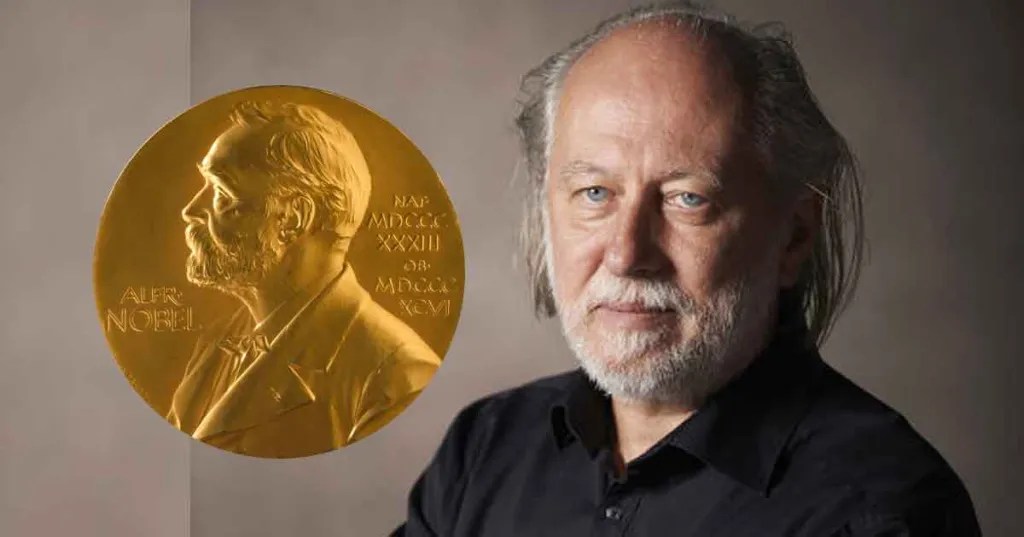
 Faruk Ahmed Roni